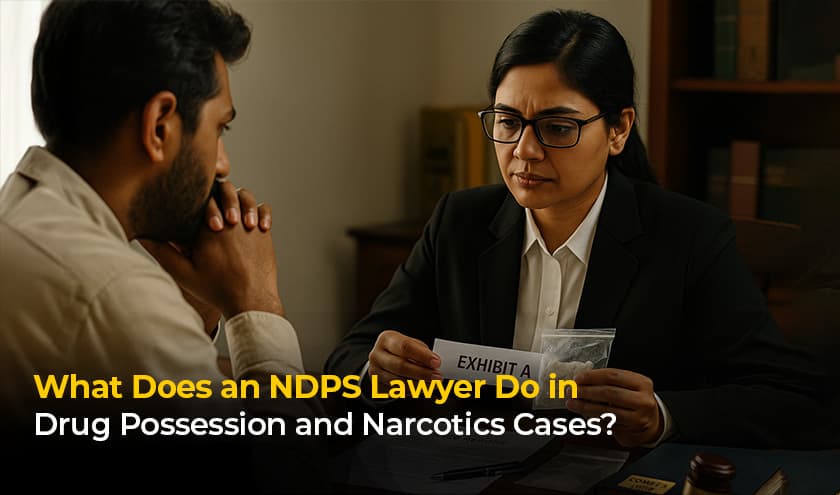
Facing Drug Charges in India? Here's What You Need to Know
Imagine this: you're at a party or just walking home, and suddenly, you're arrested for drug possession. Panic sets in. What now? Who do you call? How serious is this?
If you or someone you know is facing charges under the NDPS Act (Narcotic Drugs and Psychotropic Substances Act), the legal process can be overwhelming and terrifying. That’s why having the right NDPS lawyer by your side isn't just helpful—it’s absolutely essential.
In this blog, we’ll break down what an NDPS lawyer does, why their role is critical in drug possession cases, and how you can find the right legal expert—especially if you're searching for a drug crime lawyer, NDPS Act legal expert, or criminal lawyer in Delhi.
Understanding the NDPS Act: Why Drug Charges Are So Serious in India
The NDPS Act, 1985, is India’s central legislation to regulate and control operations relating to narcotic drugs and psychotropic substances. Unlike some countries where drug use may be decriminalized, Indian law takes a zero-tolerance approach—even small amounts can lead to severe penalties.
Key Highlights of the NDPS Act:
- Possession, sale, purchase, transport, and consumption of drugs are criminal offences.
- Punishment varies based on quantity:
- Small Quantity: Up to 1 year imprisonment or fine or both
- Commercial Quantity: Minimum 10 years to 20 years imprisonment and fine
- No provision for bail in most NDPS cases—bail is difficult but not impossible.
This is where an experienced drug possession defense attorney comes into play.
What Does an NDPS Lawyer Do in Drug Cases?
A lawyer for drug charges is not just someone who shows up in court. Their work begins the moment you’re accused or arrested. Here’s a closer look at what they do:
1. Initial Legal Assessment
An NDPS lawyer:
- Reviews the FIR, arrest details, and seizure report.
- Checks if the arrest followed due process (search warrants, legal procedure, etc.).
- Evaluates whether the case involves small, intermediate, or commercial quantity.
2. Bail Application & Hearings
- Drafts and files bail applications, often under Section 37 of the NDPS Act, where securing bail is particularly difficult.
- Argues in court on grounds of false implication, procedural lapse, or medical condition of the accused.
- Keeps families informed of progress—an important aspect often overlooked.
3. Evidence Scrutiny
- Verifies whether the seized substance was properly tested by FSL (Forensic Science Laboratory).
- Challenges the chain of custody and documentation lapses.
- Explores loopholes in the arrest and investigation process.
4. Court Representation
- Represents the accused in Sessions Court, High Court, and even the Supreme Court lawyer in India, depending on the case’s progression.
- Cross-examines prosecution witnesses and presents defense witnesses if needed.
- Ensures the accused's rights are protected throughout the legal process.
5. Plea Bargaining or Acquittal Strategy
- In some cases, may suggest a plea bargain for reduced sentence.
- In cases of false implication, the goal is complete acquittal.
In short, an NDPS lawyer works not just as a legal expert—but as your strategic defender.
Common Challenges in Drug Crime Cases
Many clients (and even families) fall into common traps when dealing with drug-related charges. Here’s what a drug crime lawyer helps navigate:
Misconceptions and Legal Complexities:
- “It’s just a small amount, it’s not serious.” → Even small quantity cases can lead to arrest and jail.
- “They didn’t find anything on me, but I was nearby.” → Under NDPS, constructive possession is still punishable.
- “Bail should be easy.” → NDPS bail rules are stricter than other criminal laws in India.
This is why you need a criminal defense expert, not just a general lawyer.
Real-Life Example: A Delhi Case Study
Case Summary: A young tech professional in Delhi was arrested under the NDPS Act for allegedly possessing 5 grams of MDMA (ecstasy)—a small quantity.
Challenge: The arrest happened without a valid search warrant, and the FSL report was delayed.
Defense Strategy:
- Our NDPS lawyer argued procedural lapses and lack of immediate FSL confirmation.
- Bail was secured based on medical history and professional background.
- Ultimately, charges were dropped due to insufficient evidence and violations of legal procedure.
This case shows how crucial it is to have the best NDPS lawyer in Delhi with a deep understanding of the law.
How to Choose the Right NDPS Lawyer Near You
Looking for an NDPS lawyer near me or the best criminal lawyer in Delhi? Here’s what you should consider:
Expertise in NDPS Law
Ask if they’ve handled NDPS cases specifically. Drug law is complex and not all criminal lawyers are familiar with it.
Track Record of Bail Success
A good drug possession defense attorney should have experience getting bail in serious NDPS cases.
Knowledge of Local Courts
A lawyer familiar with Delhi Sessions Courts or other local jurisdictions can navigate faster and more efficiently.
Transparent Communication
You want someone who explains the process and updates you regularly—not just legal jargon.
Call-to-Action: Need Legal Help for Drug Charges?
If you or someone you care about is facing charges under the NDPS Act, don’t wait. The legal process is tough, but you don’t have to face it alone.
At VakeelSaab, our team of expert criminal lawyers in India, including top NDPS Act legal experts, are ready to guide you through every step—from bail to full defense.
Frequently Asked Questions (FAQ)
1. What is the punishment for drug possession in India?
It depends on the quantity:
- Small: Up to 1 year or fine
- Commercial: 10-20 years with heavy fines
2. Can I get bail in an NDPS case?
Yes, but it's difficult. A skilled NDPS lawyer can make a strong case for bail based on health, lack of prior record, or procedural lapses.
3. What if drugs weren’t found on me, but I was nearby?
You can still be charged under constructive possession. Legal representation is essential.
4. What is the role of an FSL report in NDPS cases?
It confirms whether the substance seized is indeed a banned drug. Delays or errors in the FSL report can be used as a defense.
5. Is drug use a bailable offence in India?
Personal consumption may be treated more leniently, but it depends on circumstances and substance.