Caught in a Corporate Dispute? Here’s What You Need to Know Before Choosing an NCLT Lawyer
Imagine your company is suddenly hit with an insolvency petition. You’re confused, overwhelmed, and not sure who to turn to. This is exactly when the right NCLT lawyer can make or break your case. With legal complexities increasing, especially under the Insolvency and Bankruptcy Code (IBC), finding a skilled, trustworthy, and experienced NCLT lawyer in Delhi is no longer optional — it’s essential.
In this blog, we’ll help you cut through the noise and zero in on what truly matters when hiring legal help for National Company Law Tribunal (NCLT) cases.
What Is the NCLT, and Why Do You Need a Specialized Lawyer?
The National Company Law Tribunal (NCLT) is a quasi-judicial authority in India that adjudicates matters related to:
- Insolvency and Bankruptcy Code (IBC)
- Company Law disputes under the Companies Act, 2013
- Oppression and mismanagement claims
- Shareholder disputes
- Mergers, acquisitions, and restructuring
Unlike civil courts, NCLT cases require a deep understanding of corporate laws, tribunal rules, and technical financial issues. That’s why a general practitioner won’t suffice — you need someone with niche expertise in NCLT legal services in Delhi.
Common Mistakes to Avoid When Hiring NCLT Lawyers
Before jumping to the checklist, let’s look at frequent pitfalls clients make:
- Assuming any corporate lawyer can handle NCLT – NCLT practice involves procedural precision and domain knowledge.
- Not checking case history or expertise – A lawyer with no prior experience in insolvency cases may not be effective.
- Choosing based on fees alone – Low fees may signal inexperience; exorbitant ones don’t guarantee outcomes.
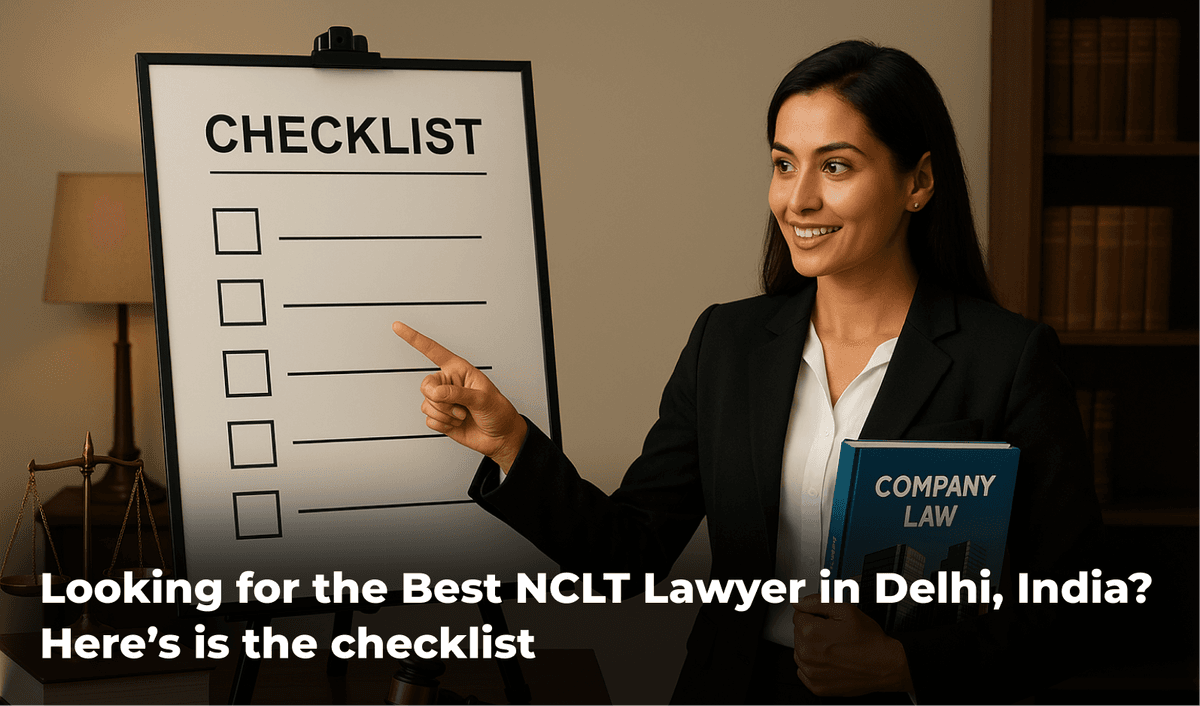
How to Find the Best NCLT Lawyers in Delhi: Your Complete Checklist
1. Proven Experience in NCLT Cases
When searching for NCLT lawyers, start by verifying if they’ve handled similar matters:
- Section 7, 9, or 10 IBC filings
- Oppression and mismanagement petitions
- Mergers and acquisitions through NCLT
- Revival or liquidation of companies
Ask this: “How many NCLT cases have you successfully represented in the last 12 months?”
2. Expertise in Insolvency & Corporate Law
Your lawyer must understand not just the Companies Act, but also:
- The Insolvency and Bankruptcy Code (IBC)
- Financial structuring and forensic audits
- Coordination with resolution professionals (RPs), Committee of Creditors (CoC), and NCLAT appeals
Look for certifications, speaking engagements, or publications to validate expertise.
3. Familiarity with the NCLT Delhi Bench
Every tribunal bench has unique procedures, working styles, and case backlogs.
A Delhi-based NCLT lawyer will:
- Know the registry and hearing schedules
- Be updated on local practices
- Have rapport with other stakeholders in the process
This local experience can make your case move faster and more efficiently.
4. Strong Litigation and Drafting Skills
NCLT cases often involve:
- Complex financial facts
- Technical objections
- Tight deadlines
A good lawyer must be able to:
- Draft well-structured petitions, replies, and rejoinders
- Present arguments logically and persuasively
- Handle cross-examinations or witness submissions if needed
Ask for anonymized samples of past petitions to evaluate quality.
5. Transparent Fees and Service Agreement
Avoid vague fee structures. The best lawyers offer clear terms, such as:
- Consultation fees (in person or to consult lawyer online)
- Per hearing charges
- Drafting/documentation costs
Avoid lawyers who hesitate to share a fee structure upfront or add “miscellaneous” costs later.
6. Client-Focused Communication & Updates
You should never feel “left in the dark.” Your lawyer must:
- Keep you updated on hearings, filings, and next steps
- Be reachable by phone/email/WhatsApp
- Offer online legal consultations if needed for remote clients or NRIs
Tip: Check online reviews or testimonials for feedback on communication.
Real Client Scenario: How a Delhi Business Avoided Liquidation
A mid-sized export company in Delhi faced an insolvency petition from a logistics vendor over disputed payments. The company approached VakeelSaab for urgent help.
Here’s what our expert NCLT lawyer team did:
- Identified a pre-existing dispute using email evidence
- Filed a Section 8 reply challenging the claim's validity
- Negotiated an out-of-court settlement with payment terms
Result: Petition dismissed, reputation protected, and business saved from liquidation proceedings.
Best Practices Followed by Top NCLT Lawyers in Delhi
Want to know what sets the best apart? Here’s what they do consistently:
Best Practice
Why It Matters
Regularly update on IBC changes
Laws evolve rapidly
Strategic dispute resolution advice
Not every case needs litigation
End-to-end documentation and representation
Saves clients time and confusion
Liaison with financial advisors & auditors
Holistic approach to corporate legal issues
Offer digital-first consultations
Convenience and speed
NCLT Legal Services in Delhi Offered by VakeelSaab
We provide full-service NCLT legal support for:
- Insolvency filing (creditor or debtor side)
- Oppression & mismanagement
- Director disputes
- Class action suits
- Tribunal appeals (NCLAT)
- Mergers, restructuring & buyouts via NCLT
Whether you’re an individual director or a corporate entity, our corporate lawyers in India will guide you through every step.
Need Help with an NCLT Matter? Contact VakeelSaab Today
Don’t risk your business or finances by hiring the wrong lawyer. At VakeelSaab, our team of best NCLT lawyers in Delhi provides strategic, end-to-end legal support for all corporate matters.
Frequently Asked Questions (FAQs)
Q1. What does an NCLT lawyer do?
An NCLT lawyer represents clients in tribunal matters like insolvency, company law disputes, and corporate restructuring.
Q2. Can I consult an NCLT lawyer online?
Yes, top lawyers (including those at VakeelSaab) offer online consultations for clients across India and abroad.
Q3. How much does it cost to hire an NCLT lawyer in Delhi?
Costs vary based on the complexity of your case. Always request a transparent, itemized quote before proceeding.
Q4. Can NCLT cases be settled out of court?
Yes, many NCLT disputes are resolved through settlements or mediation, especially in shareholder or operational creditor cases.
Q5. How long does a typical NCLT matter take?
Depending on the case type and tribunal backlog, it can range from 3 months to 18 months.